
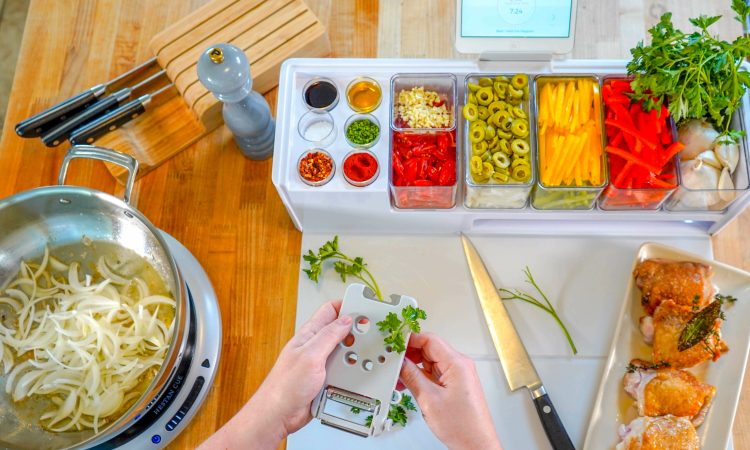
Let’s be honest. The chaos of a busy restaurant kitchen seems worlds away from your quiet countertop at 6 PM. But what if the secret to calm, efficient, and actually enjoyable home cooking was stolen directly from those pros? It is. The key isn’t just fancy knives (though they help). It’s a mindset. A system. It’s about adapting professional kitchen workflows and the sacred concept of mise en place to fit your real, sometimes messy, home life.
Mise en Place Isn’t Just Chopping First
You’ve probably heard the term: “everything in its place.” In a French brigade, it’s a religion. For us at home, it’s the ultimate hack. But it’s more than pre-chopping onions. Honestly, it’s a holistic prep strategy that happens before you even turn on the stove.
Think of it as setting the stage for a play. If you’re scrambling for the olive oil while your garlic burns, the show’s already a flop. True home mise en place means gathering, measuring, prepping, and organizing all your ingredients and tools. It transforms cooking from a reactive scramble into a flowing, almost meditative, process.
The Home Cook’s Adapted Mise en Place Checklist
- Read the Entire Recipe. Twice. No surprises. You’ll spot the “marinate for 2 hours” note before it’s too late.
- Gather Your Equipment. Baking sheet, microplane, that one whisk… get it all out. This alone saves you from frantic drawer-digging.
- Perform “The Grand Gather.” Pull every single ingredient from your pantry and fridge. Line them up. It’s satisfying, and it shows you instantly if you’re out of soy sauce.
- Prep & Contain. Chop, measure, grate. Then, place each prepped element into small bowls, ramekins, or even just neat piles on a plate. This is the iconic visual—and the game-changer.
Workflow: Thinking Like a Kitchen Line
In a pro kitchen, tasks are sequenced for maximum flow and minimal collision. We can borrow that. Your goal is to create a logical cooking sequence that respects timing and temperature. Here’s the deal: you are now the chef, the line cook, and the dishwasher. Efficiency is your profit.
Start with what takes the longest. Roast your vegetables or braise your meat first. While that’s in the oven—that’s your “passive cooking time”—you tackle the next stages. Blanch your greens, make your vinaigrette, set the table. It’s about parallel processing, not a single, stressful line of tasks.
The Power of “Clean As You Go” (The Real Secret)
This might be the most underrated professional habit. In a restaurant, there’s no giant pile of dirty dishes at the end of service—it’s dealt with constantly. Adopt this, and you’ll reclaim your evenings. While your onions sweat, wash the knife and cutting board. As the pasta water boils, wipe down the counters. That final, daunting clean-up? It’ll just be your dinner plates. Honestly, it feels like magic.
Adapting Tools and Space for a Home Kitchen
You likely don’t have a 10-foot stainless steel worktable or a dedicated prep sink. So adaptation is key. It’s about creating functional zones, just on a smaller scale.
| Professional Zone | Home Kitchen Adaptation |
| Prep Station | Keep one clear counter area. Use a large cutting board as your dedicated “workbench.” |
| Ingredient Bowls | Repurpose small bowls, teacups, jar lids, or even a muffin tin for holding prepped items. |
| Trash & Scrap Bowl | Keep a small bowl on your counter for trimmings. Empty it as it fills—saves a hundred trips to the bin. |
| Hot & Cold Holding | Use your oven (on “warm”) for finished components. A sheet tray can act as a landing zone for everything. |
And about those tools? You don’t need a full knife roll. But a few good ones, kept sharp, and within reach? That’s a pro move. Store your most-used utensils in a crock by the stove. It’s about reducing motion—every step you save is energy you keep.
Mental Workflow: Planning Beyond One Meal
Here’s where we level up. Efficient restaurant workflows think in terms of prep lists, not just single dishes. Apply this to weekly home cooking. It’s a game-changer for saving time and reducing food waste—a major pain point for so many of us.
On a slower day, maybe Sunday, do a batch of foundational prep. Roast a tray of mixed vegetables. Cook a pot of a versatile grain like quinoa or farro. Make a big batch of a base sauce, like a marinara or a tangy salsa verde. Chop a whole onion or two, storing them properly. This is your “walk-in fridge” of ready-to-go components. Throughout the week, you’re not cooking from zero; you’re assembling, which is infinitely faster and less daunting.
Embracing the “Family Meal” Mentality
In restaurants, the “family meal” is often a clever, scrappy use of leftovers and bits. That’s a brilliant mindset for home. That leftover roasted cauliflower? Toss it into a frittata. Extra quinoa? It’s a salad base for lunch. This isn’t just thrifty; it’s creative and reduces decision fatigue. You start seeing ingredients as flexible components, not locked into one recipe.
The Biggest Hurdle? It’s Probably Not Your Kitchen
It’s the mental shift. From chaotic, reactive cooking to intentional, process-driven cooking. It feels rigid at first. But, you know what? It quickly becomes freedom. The stress of the “weeknight dinner crunch” melts away because you have a system. You’re in control.
Start small. Next time you cook, just try the full mise en place. Read the recipe, get everything out, prep it all into little containers. Feel the strange calm that follows. Notice how the actual cooking feels like a graceful dance rather than a frantic race.
That’s the real adaptation. It’s not about replicating a commercial kitchen in your apartment. It’s about borrowing the principles of order, flow, and respect for the process to create more space—in your kitchen, in your schedule, and in your head. The result? Better food, sure. But more than that: a reclaiming of the joy that cooking was always supposed to bring.